
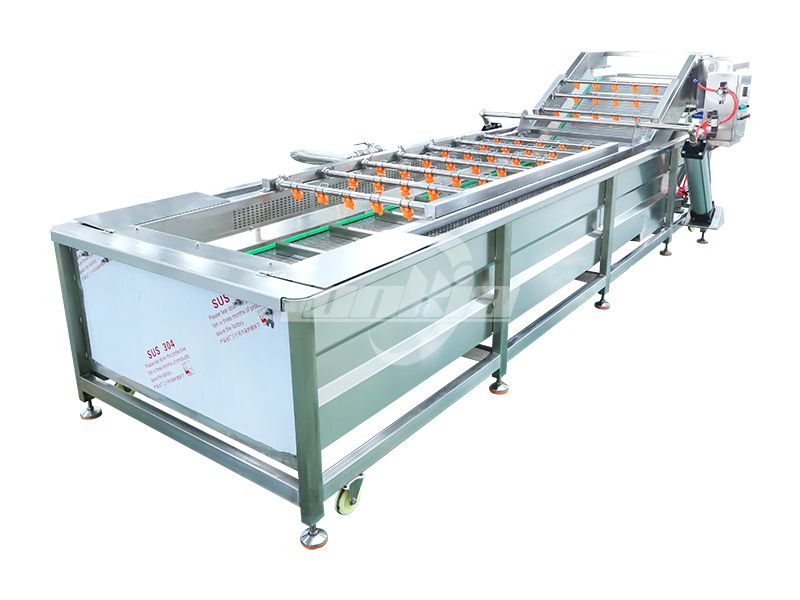
A bubble cleaning machine, also known as a bubble washer or air-bubble washing machine, is an essential piece of equipment in modern fruit and vegetable processing lines. Designed to remove soil, pesticide residues, debris, and microorganisms, this machine plays a crucial role in ensuring food safety and product quality. Whether used in salad processing plants, frozen vegetable factories, or fresh-cut fruit lines, the bubble washer provides gentle yet highly efficient cleaning for a wide range of raw materials.
What Is a Bubble Cleaning Machine?
A bubble cleaning machine uses the action of aerated water bubbles to simulate manual scrubbing. High-pressure air is injected into the water tank, creating turbulence that loosens dirt without damaging the surface of delicate produce. This method is ideal for leafy vegetables, herbs, berries, and other fragile ingredients that require gentle handling.
Bubble washers are typically made of SUS304 food-grade stainless steel, meeting strict hygiene standards and ensuring long-term durability.
How a Bubble Cleaning Machine Works
A modern industrial bubble washer combines multiple cleaning mechanisms to achieve deep and uniform washing. The process generally includes:
1. Bubble Aeration Cleaning
High-pressure air is pumped into the washing tank, forming numerous strong bubbles.
These bubbles lift and separate vegetables and fruits, gently rubbing their surfaces to remove dirt, sand, and residual pesticides.
2. Water Circulation and Filtration
The water is continuously filtered and recirculated to remove impurities.
This reduces water consumption and ensures consistent washing performance.
3. High-Pressure Spray Rinsing
After the bubble bath, a spray system using clean water rinses the products to eliminate remaining particles and ensure full cleanliness.
4. Automatic Lifting / Conveyor Discharge
A mesh belt or vibrating elevator automatically transports cleaned produce out of the tank, draining excess water and improving processing efficiency.
5. Optional Sterilization
Advanced models may include ozone, UV, or chlorine-based sanitizing systems to further reduce microbial contamination.
Key Features of Bubble Cleaning Machines
- Material: SUS304 stainless steel
- Capacity: 100 kg/h to over 3000 kg/h
- Cleaning methods: Bubble washing, spray rinsing, circulating filtration
- Gentle cleaning: Protects delicate produce like leafy greens
- Adjustable settings: Conveyor speed, water flow, and bubble intensity
- Energy-saving: Recirculating water system reduces operational costs
- Easy maintenance: Removable filters and open-design tanks for simple cleaning
- Customizable: Available in different sizes, shapes, and configurations
Applications in Fruit and Vegetable Processing Lines
Bubble cleaning machines are widely used in processing:
Leafy Vegetables
- Lettuce
- Spinach
- Kale
- Cabbage
- Parsley
- Coriander
- Dill
Root Vegetables (pre-cut or sliced)
- Carrots
- Beets
- Radish
- Potatoes
Fruits
- Apples
- Tomatoes
- Strawberries
- Grapes
- Berries
Herbs and Baby Greens
- Basil
- Mint
- Arugula
- Microgreens
These machines are often integrated with cutting, peeling, dewatering, and packaging equipment to create fully automated fruit and vegetable washing lines.
Advantages of Using a Bubble Cleaning Machine
1. Improved Hygiene and Food Safety
The bubble effect removes hidden dirt, while optional sterilization systems reduce microbial load.
2. Gentle Yet Effective Cleaning
Ideal for fragile produce that cannot withstand harsh agitation.
3. High Efficiency
Supports continuous operation, meeting the high output needs of food factories.
4. Reduced Water Usage
Water recycling lowers consumption and environmental impact.
5. Labor Savings
Automated washing greatly reduces manual handling.
6. Enhanced Product Appearance
Clean, fresh-looking produce increases market value.
7. Easy Integration
Compatible with peeling, cutting, dewatering, and packaging machines.
How to Choose the Right Bubble Cleaning Machine
Before purchasing, consider:
- Production capacity – Choose based on your daily processing volume.
- Type of produce – Delicate greens need gentle bubbles; harder vegetables may require stronger agitation.
- Space and layout – Select a model that fits your plant configuration.
- Water recycling system – Helps reduce operating costs.
- Automation level – Manual vs. fully automatic discharge.
- Cleaning and maintenance – Machines with removable filters reduce downtime.
- Manufacturer support – Choose suppliers offering customization and after-sales service.
Integration in Fruit and Vegetable Washing Lines
A standard processing line may include:
- Raw material sorting
- First bubble washing
- Spray rinsing
- Secondary washing (optional)
- Dewatering or drying
- Inspection and quality control
- Weighing and packaging
The bubble cleaning machine is the core component responsible for ensuring hygienic and high-quality raw materials throughout the line.
Conclusion
A bubble cleaning machine is an indispensable solution in modern fruit and vegetable processing. It offers efficient, gentle, and hygienic cleaning, making it ideal for fresh-cut salads, frozen vegetables, and fruit washing lines. With customizable designs, water-saving features, and high durability, the bubble washer ensures consistent product quality while reducing labor and operational costs.
For food processors seeking efficiency and compliance with food safety standards, a high-quality bubble cleaning machine is a smart and essential investment.