
Investing in a French fries manufacturing plant involves more than purchasing a production line. Before starting a project, investors need to evaluate equipment costs, building requirements, utility infrastructure, installation expenses, and ongoing operating costs. These factors directly affect the initial investment, production efficiency, and long-term profitability of the factory.
The total investment depends on several factors, including production capacity, automation level, product specifications, local construction costs, and whether the project involves a new factory or an existing building.
This guide explains the main investment components of a French fries manufacturing plant and provides a practical framework for planning a project from the beginning.
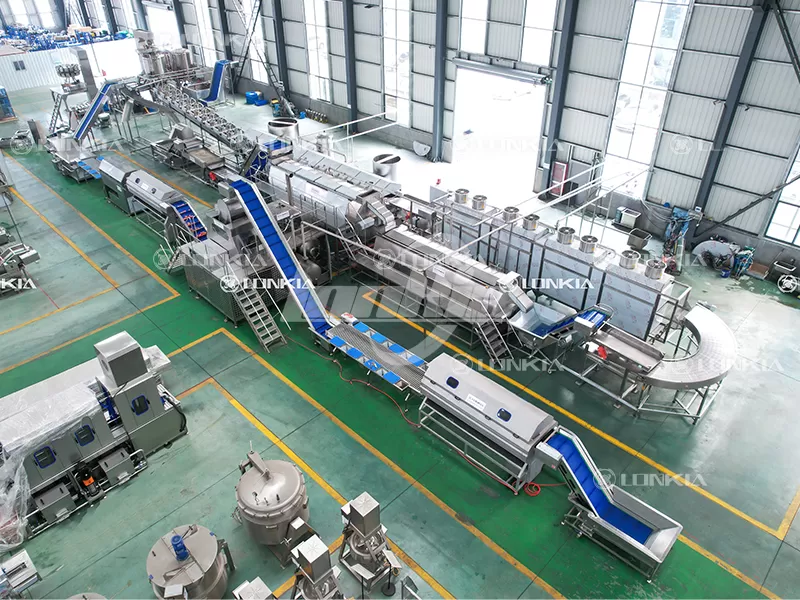
1. What Determines the Investment Cost of a French Fries Manufacturing Plant?
There is no single price for every French fries factory. A small semi-automatic facility and a fully automated industrial production plant have very different equipment, infrastructure, and labor requirements.
The following factors have the greatest influence on the total investment.
Production Capacity
French fries production line capacity is one of the first decisions investors need to make. A larger line generally requires more equipment, greater floor space, higher utility consumption, and more extensive material handling systems.
For preliminary planning, French fries projects can be divided into three broad categories:
- Small-scale production: Suitable for regional suppliers, small food manufacturers, and businesses entering the frozen fries market.
- Medium-scale production: Suitable for established food processors supplying supermarkets, distributors, restaurant chains, and foodservice companies.
- Large-scale production: Designed for industrial manufacturers serving national or international markets, often with automated processing, freezing, packaging, and material handling systems.
When comparing equipment quotations, confirm whether capacity refers to raw potato input or finished frozen fries output. These are not the same, and using different capacity definitions can lead to inaccurate investment comparisons.
Automation Level
Automation affects both initial equipment costs and daily operating expenses.
A semi-automatic line may require more workers for sorting, transferring products, packaging, and monitoring production. An automated line usually involves a higher initial investment but can reduce manual handling, improve production consistency, and support higher output.
The best solution depends on labor costs, target capacity, product quality requirements, and the expected operating schedule.
Product Specifications
Standard frozen French fries and specialty products may require different cutting, frying, freezing, or packaging configurations.
Investors should determine the required cut size, finished moisture content, frying method, freezing technology, packaging format, and shelf-life requirements before finalizing the equipment list.
2. French Fries Production Line Equipment Costs
Processing equipment is usually one of the largest components of the initial investment. A complete production line may include raw potato handling, washing, peeling, cutting, blanching, drying, frying or par-frying, freezing, and packaging.
The exact configuration depends on the production target and final product.
Main Equipment for a Frozen French Fries Factory
| Equipment | Main function | Investment considerations |
|---|---|---|
| Raw potato receiving and feeding system | Feeds potatoes into the line | Hopper size, conveying method, and raw material handling |
| Potato washing machine | Removes soil and surface impurities | Capacity, water consumption, and cleaning requirements |
| Peeling machine | Removes potato skins | Roller or brush peeling versus steam peeling |
| Inspection and sorting conveyor | Removes defective potatoes and foreign materials | Manual or automated sorting |
| Potato cutting machine | Cuts potatoes into strips | Cut dimensions, cutting accuracy, and interchangeable blades |
| Blanching machine | Controls enzymatic activity and supports color consistency | Temperature, residence time, and heating method |
| Dewatering or drying equipment | Removes surface water before frying | Required moisture removal and available floor space |
| Continuous fryer | Par-fries or fries potato strips | Heating source, oil management, temperature control, and capacity |
| Oil removal and cooling equipment | Removes excess surface oil and cools the product | Product quality requirements and line speed |
| IQF freezer | Freezes fries individually or with minimal clumping | Freezing capacity, temperature requirements, and refrigeration system |
| Packaging machine | Weighs and packs finished products | Bag size, packaging speed, and automation level |
| Conveyors and control system | Connects and coordinates the production process | Layout, control integration, and future expansion |
Not every factory needs every machine in the same configuration. For example, a plant producing fresh-cut refrigerated fries may not need an industrial IQF freezer or continuous fryer. A frozen fries factory generally needs freezing equipment and a suitable cold-storage arrangement.
Choosing Between Essential and Optional Equipment
When the investment budget is limited, separate the equipment list into essential production machinery and optional automation.
Essential equipment should support the complete process required to achieve the target product specifications. Optional equipment may include automated optical sorting, robotic palletizing, advanced inspection systems, and additional automated packaging stations.
However, reducing the initial investment should not compromise food safety, required processing steps, or finished product quality.
A useful approach is to request quotations for several configurations, such as a basic line, a standard automated line, and an advanced line. Compare not only the purchase price but also labor requirements, energy consumption, maintenance costs, and expected production output.
3. Building and Factory Space Requirements
The building is another major part of a French fries manufacturing plant investment. The required space depends on production capacity, equipment arrangement, raw material storage, finished product storage, and the movement of people and materials.
Main Areas to Include in the Factory Layout
A well-planned factory should provide separate areas for different production activities.
Raw potato receiving and storage
This area needs enough room for unloading, temporary raw material storage, inspection, and feeding equipment. Storage conditions should be suitable for the potato varieties and processing schedule.
Processing area
The processing area accommodates washing, peeling, cutting, blanching, drying, frying, and cooling equipment. The layout should allow safe operation, routine cleaning, and convenient maintenance access.
Freezing and packaging area
Frozen French fries require a suitable freezing system followed by packaging. The layout should account for product transfer, packaging materials, operator access, and temperature control where required.
Cold storage
A frozen product factory normally needs cold storage to hold finished products before shipment. The required capacity depends on daily output, inventory policy, shipment frequency, and distribution arrangements.
Utility and technical rooms
Depending on the selected technology, the factory may need space for electrical panels, refrigeration equipment, boilers, water treatment, compressed air, and other auxiliary systems.
Supporting facilities
Additional space may be required for staff changing rooms, sanitation facilities, quality control, maintenance, offices, and waste handling.
How Much Factory Space Is Needed?
There is no universal floor-space requirement for a French fries factory. A compact line with limited storage needs a different building from an integrated plant with large cold rooms and automated pallet handling.
To estimate the required space, consider the following:
- The overall dimensions of every machine.
- The distance required between machines for safe operation and cleaning.
- Raw potato receiving and finished product dispatch routes.
- Storage for raw materials, packaging materials, and finished products.
- The location of drains, water connections, electrical supplies, and ventilation.
- Space for future capacity expansion.
A common planning mistake is to calculate the building size using only the combined dimensions of the machines. The factory also needs space for operators, maintenance, cleaning, material movement, and temporary product storage.
Before construction or renovation, prepare a complete factory layout based on the selected equipment. This helps identify potential space conflicts before they become expensive problems.
4. Utility Costs: Electricity, Water, Steam and Refrigeration
Utilities can have a significant impact on both the initial investment and the operating cost of a French fries manufacturing plant. Their requirements vary according to the processing technology, production capacity, operating hours, and local energy prices.
Electricity
Electricity is used by conveyors, pumps, cutting machines, control systems, packaging equipment, and other production machinery.
Frozen fries plants also need electricity for refrigeration compressors, cold storage, and freezing equipment. In many projects, refrigeration represents a substantial part of the total electrical load.
Before installation, request the connected power and expected operating load of each machine. The factory's electrical infrastructure should be designed around the actual equipment configuration, starting currents, simultaneous operating requirements, and local electrical standards.
Water Supply and Wastewater Treatment
Water is required for potato washing, blanching, equipment cleaning, and sanitation. The exact consumption depends on the process design and whether water recovery or recirculation systems are installed.
The factory should evaluate:
- Available water supply and water quality.
- Daily water consumption and peak demand.
- Water treatment requirements.
- Drainage capacity and wastewater discharge regulations.
- Systems for removing soil, starch, and suspended solids from wastewater.
A properly designed water circulation system can reduce fresh water consumption, provided that hygiene and process requirements are maintained.
Steam and Heating
Steam or another heating source may be needed for blanching, frying oil heating, hot water preparation, or steam peeling, depending on the production line.
Possible heating options include electricity, natural gas, diesel, steam, or other locally available energy sources. The most appropriate choice depends on energy prices, boiler regulations, environmental requirements, and the selected equipment.
If a central boiler is used, its capacity must be calculated according to the combined demand of the equipment operating at the same time.
Refrigeration and Cold Storage
An industrial frozen fries plant needs a refrigeration system capable of meeting the required freezing temperature, product throughput, and finished product storage conditions.
The total refrigeration investment depends on factors such as:
- Required freezing capacity in kilograms per hour.
- Incoming product temperature and product specifications.
- Required final product temperature.
- Local ambient conditions.
- Freezer type and insulation performance.
- Cold-storage volume and target storage temperature.
Refrigeration should be planned as part of the complete production system rather than treated as an isolated purchase. Insufficient freezing capacity can restrict the output of the entire line, even when upstream processing equipment has enough capacity.
5. Installation, Packaging and Other Initial Expenses
The total project investment includes more than equipment and building construction. Several additional expenses should be included in the initial budget.
Installation and Commissioning
Installation may involve equipment positioning, conveyor alignment, electrical connections, piping, control integration, and production testing.
For imported machinery, also consider international shipping, customs duties, inland transportation, insurance, and any local installation requirements.
Confirm whether the equipment quotation includes installation, commissioning, operator training, and after-sales technical support.
Packaging Materials
Packaging costs depend on the bag material, bag size, printing, carton specifications, and packaging format.
These materials are often recurring operating expenses rather than one-time capital costs. However, the factory may need an initial stock of packaging materials before commercial production begins.
Quality Control and Food Safety
Depending on the target market and applicable regulations, the factory may need laboratory equipment, product inspection systems, hygiene facilities, traceability software, and food safety management systems.
The project should also account for required inspections, permits, and certification expenses.
Spare Parts and Contingency
Initial spare parts can help reduce downtime after commissioning. A contingency allowance is also useful for unexpected construction changes, utility upgrades, transportation expenses, and installation adjustments.
The appropriate allowance depends on the maturity of the project design and the uncertainty of local construction and procurement costs.
6. How to Calculate the Total Investment
A practical investment estimate should separate capital expenditure from operating expenditure.
Capital expenditure covers the costs required to build and equip the factory. Operating expenditure covers the costs of running it after production begins.
Use the following framework to prepare a preliminary investment budget.
| Investment category | Items to include |
|---|---|
| Production equipment | Main processing machines, conveyors, controls, and optional automation |
| Building and site preparation | Land, construction or renovation, flooring, drainage, and internal partitions |
| Utility infrastructure | Electrical systems, water supply, wastewater treatment, heating, and compressed air |
| Refrigeration | IQF freezer, refrigeration system, insulated cold rooms, and temperature controls |
| Installation and logistics | Shipping, customs, installation, commissioning, and training |
| Food safety and quality | Inspection equipment, sanitation facilities, testing, and required compliance measures |
| Initial working capital | Raw potatoes, cooking oil, packaging materials, labor, energy, and other startup expenses |
| Contingency | Allowance for unforeseen project costs |
The total initial investment can be expressed as:
Total Initial Investment = Equipment + Building + Utilities + Installation and Logistics + Other Startup Costs + Working Capital
Land acquisition should be added separately when the project requires purchasing a new site.
For a reliable estimate, request a detailed equipment quotation, obtain local building and utility estimates, and calculate the working capital required for the planned production schedule.
Initial Investment vs. Production Cost
These two figures should not be confused.
The initial investment determines how much capital is needed to establish the factory. The production cost determines how much it costs to manufacture and deliver each kilogram of French fries.
Production costs commonly include raw potatoes, oil, energy, water, packaging, labor, maintenance, refrigeration, and waste disposal.
A factory with a lower equipment purchase price may still have higher long-term costs if it requires more labor, consumes more energy, or produces excessive raw material waste.
7. How to Reduce Investment Without Sacrificing Production Quality
Reducing investment does not necessarily mean buying the cheapest equipment. The objective is to avoid unnecessary expenditure while maintaining reliable production, food safety, and product quality.
Select Equipment Based on Real Demand
Start with a realistic sales forecast. Buying a line designed for much higher output than the market can absorb may increase financing costs, energy expenses, and equipment depreciation without generating additional revenue.
At the same time, the planned capacity should leave sufficient room for reasonable future growth.
Consider a Phased Investment
Some projects can begin with a smaller production capacity or a simpler automation configuration and expand later.
For example, investors may prioritize the essential processing line and basic packaging system while preparing the layout and utility infrastructure for future upgrades.
However, refrigeration, electrical distribution, drainage, and building dimensions should be planned carefully if expansion is expected. Retrofitting these systems later can be costly.
Optimize the Production Layout
A well-designed layout can reduce unnecessary conveyors, material handling, installation work, and wasted floor space.
Arrange equipment according to the actual process sequence and maintain sufficient room for cleaning, maintenance, and safe operation.
Compare Total Cost of Ownership
When comparing suppliers, evaluate more than the equipment price. Ask for details about:
- Rated capacity and expected actual throughput.
- Power consumption and heating requirements.
- Water consumption and wastewater arrangements.
- Labor requirements.
- Wear parts and maintenance intervals.
- Warranty terms and technical support.
- Installation, commissioning, and operator training.
A complete comparison helps investors understand the long-term financial implications of different equipment configurations.
8. Key Questions to Answer Before Requesting a Quotation
Preparing the following information makes it easier for equipment suppliers to recommend a suitable line and provide a more accurate investment estimate.
1. What is the target capacity?
Specify the required raw potato input or finished product output in kilograms per hour or tonnes per day.
2. What product will the factory manufacture?
Confirm whether the project involves frozen French fries, fresh-cut fries, or another potato product. The processing and storage requirements can differ significantly.
3. What level of automation is required?
Determine whether the factory will rely on manual handling, semi-automatic equipment, or a fully integrated production line.
4. Is a suitable building already available?
Provide the building dimensions, floor plan, ceiling height, and available utility connections if these are known.
5. What utilities are available?
Specify the local power supply, available heating sources, water supply, drainage arrangements, and refrigeration requirements.
6. Where will the equipment be installed?
The installation country and location affect shipping, customs, electrical standards, service arrangements, and local compliance requirements.
7. What is the investment budget?
A preliminary budget helps the supplier recommend a realistic configuration and identify which functions should be included in the initial phase.
9. Plan Your French Fries Manufacturing Plant with LONKIA
Establishing a French fries manufacturing plant requires coordination between processing equipment, building design, utility systems, and the final product requirements. Making these decisions together can help investors control initial costs and avoid expensive modifications during installation.
LONKIA provides food processing equipment and customized production line solutions, from individual machines to integrated processing systems. Depending on project requirements, the scope can include potato washing, peeling, cutting, blanching, frying, cooling, freezing, packaging, and related conveying equipment.
For a preliminary project assessment, prepare your target capacity, product specifications, available factory space, utility conditions, and expected investment range. These details help determine the appropriate equipment configuration and identify the main items that need to be included in the project budget.
Planning a French fries factory? Contact LONKIA to discuss your production requirements and request a customized equipment proposal. A properly planned production line can help you make better investment decisions, optimize factory space, and build a production system that supports your business goals.