
When planning a potato chip production line, factory space is one of the most important factors to consider. A well-designed layout helps improve production efficiency, reduce unnecessary material handling, and ensure smooth operation.
So, how much factory space do you need for a potato chip production line? The answer depends on production capacity, equipment configuration, processing flow, and packaging requirements.
This article explains the main factors to consider when planning your factory layout.
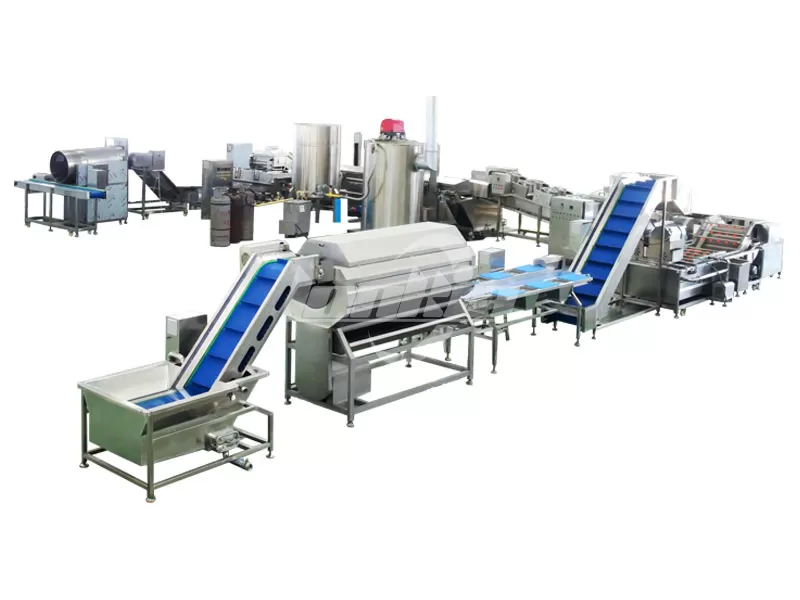
1. How Much Space Does a Potato Chip Production Line Need?
The required factory space varies depending on the production capacity and level of automation.
Here are some general estimates for planning purposes:
| Production Capacity | Suggested Factory Area |
|---|---|
| 100–200 kg/h | 200–400 m² |
| 300–500 kg/h | 400–800 m² |
| 500–1,000 kg/h | 800–1,500 m² |
| 1,000 kg/h and above | 1,500 m² or more |
These figures are preliminary estimates. The actual space required depends on the selected equipment, factory layout, storage areas, and production requirements.
2. Key Areas in a Potato Chip Factory Layout
A complete potato chip production facility usually includes several functional areas.
Raw Potato Storage
This area is used to store fresh potatoes before processing. Sufficient space should be reserved for raw material storage, loading, and transportation.
Potato Washing and Peeling Area
Potatoes are washed and peeled to remove dirt and skin. This section should have enough space for washing and peeling equipment, water drainage, and maintenance.
Slicing and Blanching Area
After peeling, potatoes are sliced into uniform pieces and may undergo blanching to remove excess starch. The equipment should be arranged to ensure a continuous production flow.
Frying and Seasoning Area
The frying section is one of the most important parts of a potato chip production line. Adequate space is needed for the fryer, oil filtration system, ventilation, and seasoning equipment.
Cooling and Packaging Area
After frying and seasoning, potato chips are cooled before entering the packaging machine. This area should provide sufficient space for packaging equipment, finished product handling, and temporary storage.
Finished Product Storage
A separate storage area is recommended for packaged potato chips. It should be clean, dry, and suitable for protecting finished products before shipment.
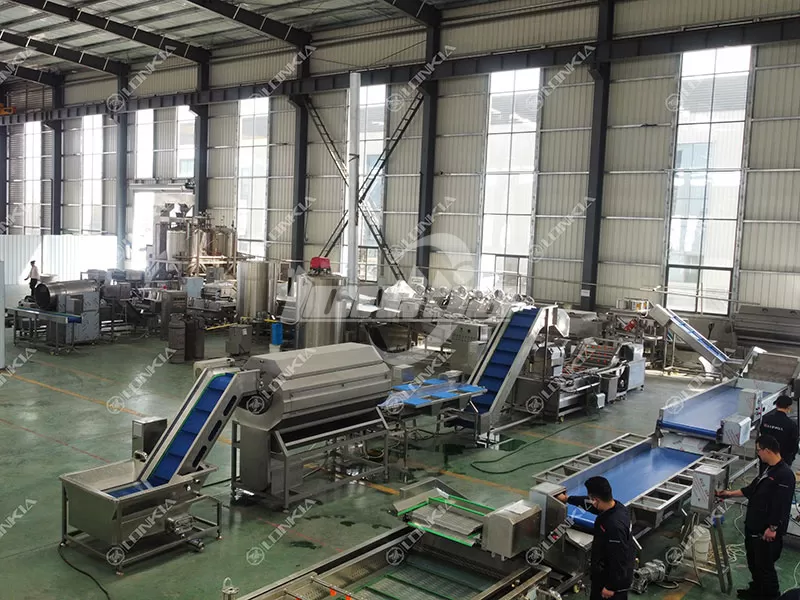
3. What Factors Affect Factory Space Requirements?
Several factors determine how much space your potato chip factory needs.
Production Capacity
Higher production capacity generally requires larger equipment, longer processing lines, and more space for material handling.
Equipment Configuration
A basic production line may include washing, peeling, slicing, frying, seasoning, and packaging machines. Fully automatic lines may require additional conveyors, storage systems, and auxiliary equipment.
Production Process
Different processing methods require different layouts. For example, a line with additional blanching, drying, or cooling equipment needs more installation space.
Automation Level
Automatic production lines can reduce manual handling, but they may require additional space for control systems, conveyors, and auxiliary equipment.
Factory Layout and Workflow
A good layout should minimize unnecessary movement of raw materials and finished products. It should also provide sufficient space for operators, equipment maintenance, and cleaning.
4. How to Design an Efficient Potato Chip Production Line Layout
When planning your factory, consider the following points:
- Arrange equipment in processing order: Follow the production sequence from potato washing to final packaging.
- Separate raw materials and finished products: Avoid unnecessary cross-contamination and improve production management.
- Allow sufficient maintenance space: Leave room around machines for cleaning, inspection, and repairs.
- Plan water and drainage systems: Washing and blanching equipment require suitable water supply and drainage.
- Consider future expansion: Reserve additional space if you plan to increase production capacity later.
A practical layout should balance production efficiency, equipment accessibility, and available factory space.
5. How to Get a Suitable Factory Layout?
Before purchasing equipment, it is important to determine your production capacity, processing requirements, and available factory dimensions.
LONKIA provides customized potato chip production lines, from individual machines to complete processing solutions. Based on your factory dimensions and production requirements, the equipment configuration and layout can be adjusted to make better use of the available space.
Providing your factory length, width, and target production capacity will help engineers prepare a suitable equipment layout.
Conclusion
The factory space required for a potato chip production line depends on production capacity, equipment configuration, and processing requirements. A properly planned layout can improve workflow, simplify equipment maintenance, and make better use of available space.
Before investing in a production line, evaluate your factory dimensions and processing needs to determine the most suitable equipment arrangement.