
Choosing the right industrial French fry cutter is a critical decision for any factory producing potato products. The cutter not only determines the shape, size, and quality of the fries, but also impacts overall efficiency, production cost, and system integration. With many models and configurations available, selecting the right machine can be confusing without clear criteria.
This guide explains the main factors to consider when choosing a French fry cutter that fits your factory’s production goals.
What Is an Industrial French Fry Cutter?
An industrial French fry cutter is a heavy‑duty machine designed to cut washed and peeled potatoes into consistent strips for frying, baking, or freezing. Unlike small commercial cutters, industrial versions are built for continuous operation, high throughput, and durability, and they support integration into automated production lines.
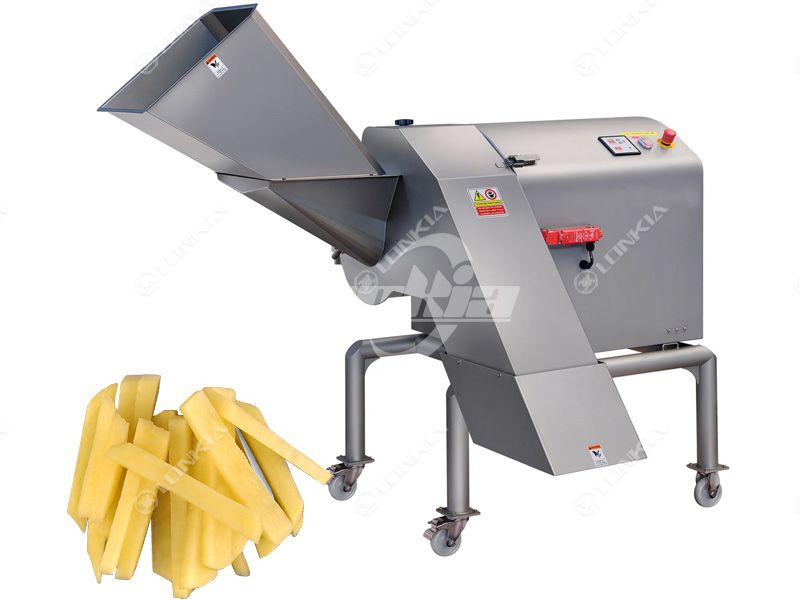
Key Factors to Consider When Choosing a French Fry Cutter
When selecting an industrial cutter, evaluate the following aspects carefully:
1. Production Capacity (Throughput)
Capacity is the first and most important factor. Choose a cutter that matches your daily or hourly output demand.
| Production Scale | Typical Capacity |
|---|---|
| Small | 100–300 kg/h |
| Medium | 300–800 kg/h |
| Large | 800–2000+ kg/h |
| High Volume | 2000–5000+ kg/h |
If the cutter’s capacity is too low, it can create bottlenecks;
If it’s oversized, it may lead to unnecessary cost and energy consumption.
2. Cut Size & Shape Options
Different markets and products require different fry shapes:
- Shoestring fries: 6–8 mm
- Standard fries: 8–10 mm
- Steak cut / thick fries: 10–14 mm
- Crinkle / wavy cut: decorative, premium product
A good industrial cutter should allow easy blade changes to accommodate various fry styles.
3. Build Quality & Materials
Food‑grade materials ensure hygiene and durability. Key requirements:
✔ SUS304 stainless steel for all food contact parts
✔ Heavy‑duty bearings and shafts for long life
✔ Welded frame with minimal gaps for easy cleaning
A well‑built cutter reduces wear, downtime, and long‑term maintenance costs.
4. Motor Power and Blade Design
Higher motor power often means stronger torque and smoother cutting, especially for:
- Frozen or chilled potatoes
- Hard or dense potato varieties
Blade quality also matters: high‑strength stainless steel blades stay sharper longer and reduce breakage.
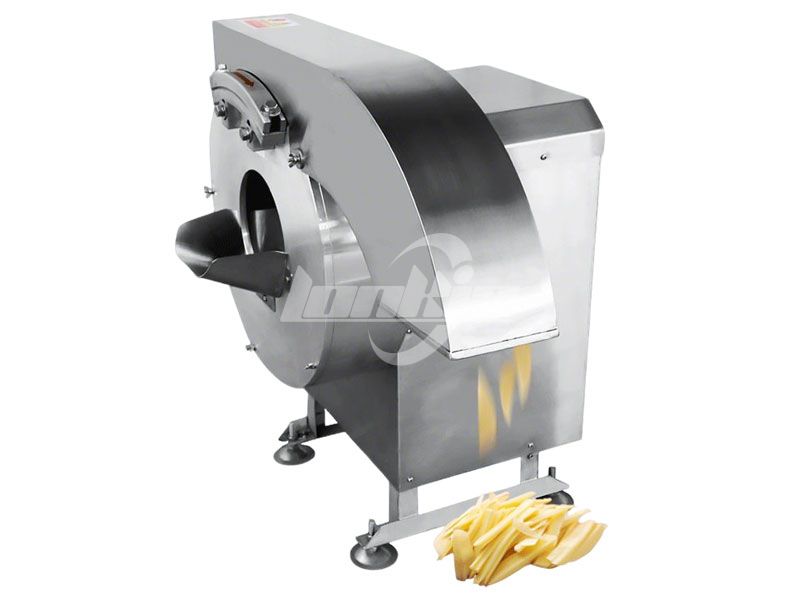
5. Integration With Your Production Line
Your cutter should seamlessly link with upstream and downstream equipment:
- Potato washer & peeler
- Steam peeler (for low‑loss operations)
- Blancher
- Continuous fryer
- Dewatering system
- IQF freezer
- Packaging
Check conveyor compatibility, feed height, and discharge interface to ensure smooth integration.
6. Automation and Control Features
Modern industrial cutters may include:
- Variable speed control
- Touchscreen PLC interfaces
- Safety interlocks
- Auto lubrication systems
These reduce labor dependency and enhance production stability.
7. Ease of Cleaning & Maintenance
For food safety and operational uptime:
✔ Quick‑release blades
✔ Removable covers
✔ Smooth internal surfaces
✔ Minimal crevices for dirt buildup
Easy access saves time during routine cleaning and inspection.

8. Spare Parts and After‑Sales Support
Reliable technical support and spare parts availability are crucial for long‑term operation. Choose suppliers with:
- Local or regional service teams
- Fast spare parts delivery
- Installation and training support
Industrial Cutter Types You Might Encounter
Manual Feed Cutter
Basic, low‑cost models for small or semi‑automated lines.
Pros: Inexpensive, simple
Cons: Limited throughput, manual labor required
Semi‑Automatic Industrial Cutter
Has auto feed but still requires operator intervention.
Pros: Moderate output, easier operation
Cons: Not fully continuous
Fully Automatic Inline Cutter
Designed for high‑capacity production lines with minimal human involvement.
Pros: Continuous operation, high throughput
Cons: Higher upfront cost
Cost Considerations
The price of industrial French fry cutters varies based on capacity, automation, and build:
Estimated Price Ranges
| Feature | Price (USD) |
|---|---|
| Small entry‑level | $4,000 – $8,000 |
| Medium industrial | $8,000 – $20,000 |
| High‑capacity automated | $20,000 – $50,000+ |
Prices vary by region, warranty, and supplier value‑added services.
Why Choose LONKIA Industrial French Fry Cutters
For factories looking for reliable, high‑performance cutters, LONKIA offers:
✔ Wide range of capacities from small to large
✔ Interchangeable blade sets for diverse shapes
✔ Heavy‑duty stainless steel construction
✔ Smooth integration with washing, steaming, blanching, frying, freezing, and packaging
✔ Professional installation, training, and after‑sales support
LONKIA cutters help factories achieve high throughput with consistent quality, making them ideal for commercial and industrial potato processing lines.
Conclusion
Selecting the right industrial French fry cutter requires careful evaluation of:
✔ Production capacity needs
✔ Cut size flexibility
✔ Build quality
✔ Automation and controls
✔ Integration with your existing line
✔ After‑sales support