
In modern potato processing industries—such as frozen French fries, potato chips, and fresh-cut potato products—the industrial potato peeler is a critical piece of equipment. Factories of different sizes have very different requirements when it comes to capacity, automation level, hygiene standards, and investment budget.
This guide explains how to choose the right industrial potato peeling machine based on factory production capacity, helping you avoid mismatched equipment, production bottlenecks, or unnecessary costs.
1. Production Capacity: The Core Selection Factor
The most important parameter of an industrial potato peeler is its processing capacity (kg/h or tons/h). Matching machine capacity with actual production demand ensures stable operation and high efficiency.
Small-Scale Factories (Below 1 Ton/Hour)
Suitable for:
- Small food processing plants
- Central kitchens
- Start-up potato processing businesses
Recommended configuration:
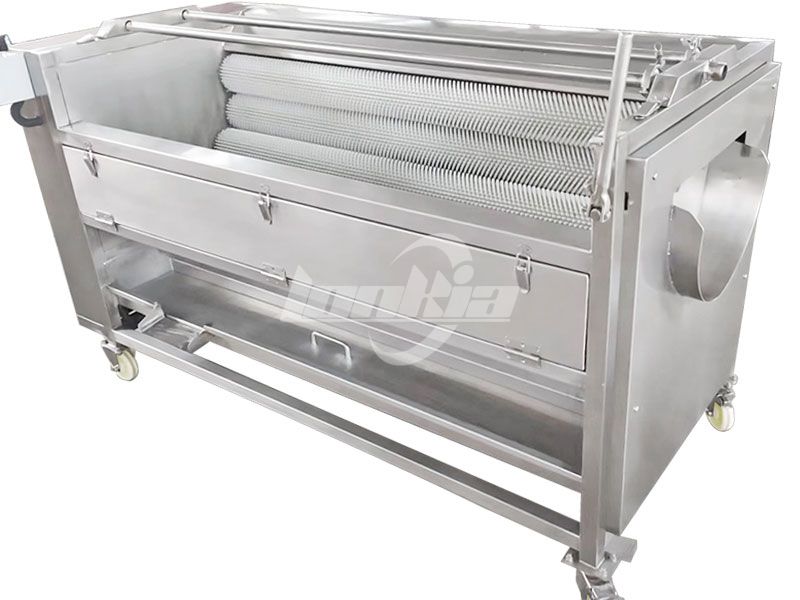
- Capacity: 300–800 kg/h
- Type: Small steam peeler or abrasive peeler
- Features: Compact design, easy operation, low investment cost
This type is ideal for factories with limited space and budget while still meeting basic peeling requirements.
Medium-Scale Factories (1–3 Tons/Hour)
Suitable for:
- Medium-sized fresh-cut or frozen food processors
- Growing factories expanding production
Recommended configuration:
- Capacity: 1000–3000 kg/h
- Type: Standard steam potato peeler
- Features: Continuous operation, uniform peeling, low peeling loss
At this stage, the peeler is usually integrated with washing, cutting, blanching, frying, or freezing equipment to form a semi-automatic or fully automatic processing line.
Large-Scale Factories (Above 3 Tons/Hour)
Suitable for:
- Large food manufacturers
- Export-oriented potato processing plants
- Fully automated industrial production lines
Recommended configuration:
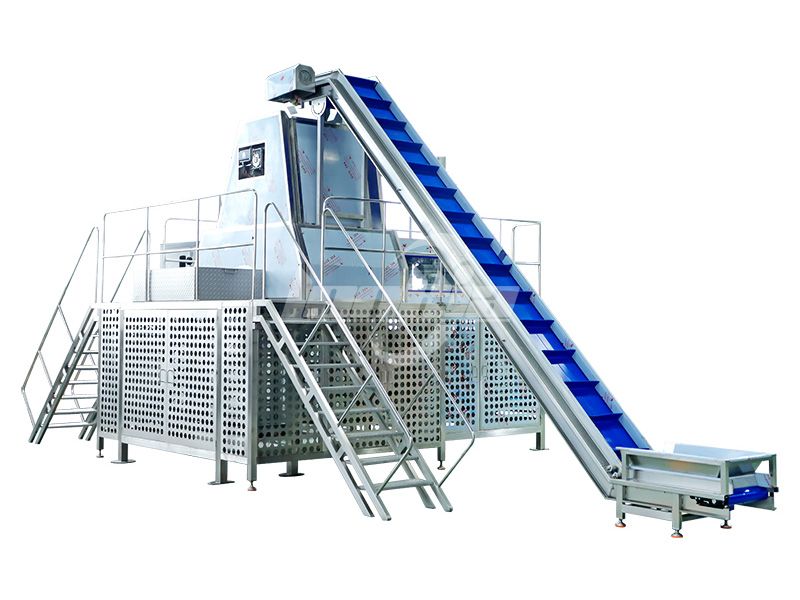
- Capacity: 3000–8000 kg/h or higher
- Type: Industrial steam potato peeler with automatic control
- Features: High throughput, low raw material loss, continuous operation
These machines are designed for long-term, high-load production and can be connected to PLC systems and factory automation platforms.
2. Peeling Technology and Its Impact on Cost and Efficiency
There are two main types of industrial potato peeling technologies:
Steam Peeling Technology
- ✔ Low peeling loss (typically 4–8%)
- ✔ Fast and uniform peeling
- ✔ Ideal for automation and large-scale production
- ✖ Higher initial investment
- ✖ Requires a stable steam supply
Best suited for medium and large factories where raw material yield and consistency are critical.
Abrasive / Roller Peeling Technology
- ✔ Lower initial equipment cost
- ✔ Simple structure and easy operation
- ✖ Higher peeling loss
- ✖ Surface finish may be less uniform
Best suited for small factories or projects with limited budgets.
3. Five Key Factors to Consider When Choosing a Potato Peeler
Beyond capacity and peeling method, the following factors are essential:
1. Hygiene and Food-Grade Design
Machines should be made of SUS304 stainless steel, with smooth surfaces and no dead corners to meet food safety standards.
2. Automation Level
Consider whether automatic feeding, discharging, and PLC control are required to reduce labor costs.
3. Line Integration Capability
The peeler should integrate seamlessly with washers, cutters, blanchers, fryers, freezers, and packaging machines.
4. Energy Requirements
Choose a machine compatible with your factory’s energy supply (steam, electricity, gas, or thermal oil).
5. After-Sales Service and Spare Parts
Reliable technical support and long-term spare parts availability are essential for minimizing downtime.
4. Recommended Configurations by Factory Size
| Factory Size | Capacity Range | Recommended Technology | Typical Configuration |
|---|---|---|---|
| Small | 300–800 kg/h | Abrasive or small steam peeler | Manual feeding, basic control |
| Medium | 1000–3000 kg/h | Standard steam peeler | Automatic feeding, PLC control |
| Large | 3000–8000+ kg/h | Industrial steam peeler | Fully automatic line integration |
LONKIA Industrial Potato Peeling Solutions
LONKIA offers a complete range of industrial potato peelers designed for different production capacities:
- High-efficiency steam peeling technology
- Multiple capacity options for small, medium, and large factories
- Modular and automated designs for full processing lines
- Food-grade stainless steel construction
- Professional installation, training, and after-sales support
Whether you are building a new potato processing line or upgrading existing equipment, LONKIA provides reliable and cost-effective peeling solutions.
Conclusion
Choosing the right industrial potato peeler is not just about buying a machine—it is about matching equipment to your factory’s capacity, automation needs, and long-term production goals.
- Small factories benefit from compact and economical solutions
- Medium factories should focus on efficiency and scalability
- Large factories require high-capacity, fully automated systems
With proper selection, you can significantly improve productivity, reduce raw material loss, and optimize overall operating costs.