
In the modern food processing, clean vegetable distribution, and large-scale catering industries, how to clean fruits and vegetables efficiently and thoroughly without damaging their original appearance has always been a focus of enterprise attention. Traditional manual cleaning is not only time-consuming and labor-intensive, but also highly prone to causing mechanical damage to certain delicate produce.
As an "all-rounder" in the field of food machinery, the bubble washing machine, with its gentle and efficient cleaning method, has become an indispensable piece of equipment on automated assembly lines. This article provides an in-depth analysis of the application scope, core working principle, and practical selection guide for enterprises purchasing a bubble washing machine.
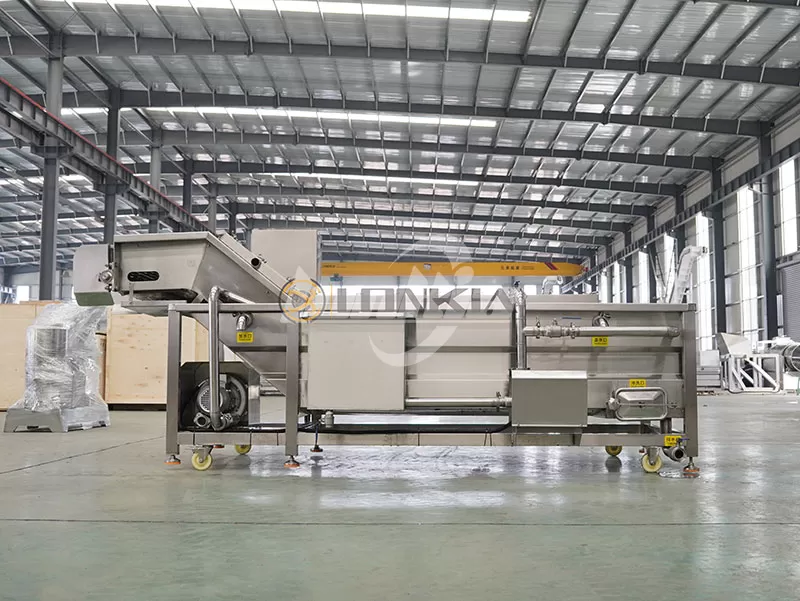
1. What Fruits and Vegetables Can a Bubble Washing Machine Clean?
Bubble washing machines are extremely versatile, particularly excelling at handling materials with delicate skins, a fear of bumping, complex shapes, or heavy silt. Based on the characteristics of the produce, they can be classified into four major categories:
- Leafy Vegetables (Best Performance): Spinach, lettuce, Chinese cabbage, leeks, celery, etc. The leaves of these vegetables are thin and fragile, making them prone to tearing during manual scrubbing. The bubble washing machine can flush out the silt in the crevices of the leaves without damaging them.
- Root Vegetables: Carrots, potatoes, sweet potatoes, green onions, ginger, etc. Although these materials are sometimes paired with brush roller washing machines for peeling, the bubble washing machine is highly suitable as a pre-treatment device for "soaking silt" or a post-treatment device for "fine washing."
- Solanaceous and Melon Vegetables: Tomatoes, cucumbers, eggplants, peppers, zucchini, etc. Bubble cleaning can easily wash away stubborn dirt at the fruit pedicle without scratching the protective wax layer on the vegetable skin.
- Fruits and Berries: Apples, pears, strawberries, blueberries, cherry tomatoes, grapes, etc. For high-value berries like strawberries and blueberries that break easily, the "scrubbing" action of high-pressure bubbles is currently the safest industrial cleaning method.
Industry Tip: In addition to fruits and vegetables, bubble washing machines are also commonly used for cleaning seafood (such as kelp and clam desanding), as well as pre-treatment cleaning for Chinese herbal medicines and dehydrated vegetables.
2. Working Principle of the Bubble Washing Machine
The reason why the bubble washing machine can achieve a "clean without damaging materials" result lies in its unique combined air-water power system.
The specific workflow and principles are as follows:
- High-Pressure Blasting: The bottom of the equipment is equipped with a high-pressure fan/blower, which injects a large amount of air into the washing tank through a dense network of pipes. The air forms countless high-pressure bubbles in the water, which collapse (blast) upon contact with the surface of the fruits and vegetables.
- Simulated Manual Washing: The energy generated by the bursting of the bubbles acts as a continuous, omnidirectional "micro-frequency vibration" and "gentle friction" on the surface of the produce. This quickly dislodges silt, impurities, and pesticide residues. It perfectly simulates manual washing but with a more uniform force.
- Material Propulsion: Along with the tumbling of the bubbles, the water flow in the tank forms a surging vortex, causing the fruits and vegetables to continuously overturn and advance in the water. This avoids dead corners caused by material accumulation.
- Secondary Spraying and Separation:
Floating Matter: Light floating impurities such as hair and weeds on the vegetable surface enter the overflow port with the water flow and are intercepted by a filter screen.
Sediment: Dislodged silt sinks into the sedimentation tank through the bottom filter screen, preventing the water flow from cross-contaminating the vegetables.
Discharging: The elevating mesh belt slowly lifts the cleaned fruits and vegetables out of the water. At the discharge end, a high-pressure clean water spray is usually configured for a final rinse.
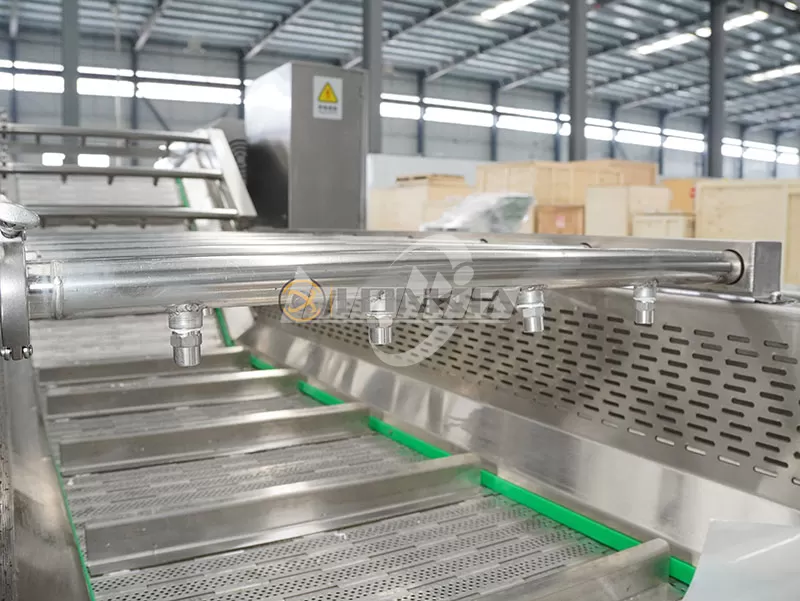
3. Enterprise Selection Guide: How to Choose the Right Bubble Washing Machine?
There are numerous models of bubble washing machines on the market, with prices ranging from thousands to hundreds of thousands. When purchasing, enterprises are advised to evaluate from the following dimensions instead of blindly chasing low prices:
Material and Craftsmanship (Hard Index)
Food machinery safety is of paramount importance. A legitimate bubble washing machine must use food-grade 304 stainless steel (including the frame, tank, mesh belt, water pump, etc.). Inferior manufacturers use 201 stainless steel to cut costs, which will rust within half a year and contaminate food.
Capacity Matching and Size Customization
Choose the appropriate line length based on your daily or hourly production volume.
- Small Processing Workshops / Central Kitchens: A model with a length of 2–3 meters can meet the demand.
- Large Clean Vegetable Processing Plants: Usually require a production line of 4–6 meters or even longer, combined with multi-stage cleaning.
Customization of Functional Modules (Optional Based on Demand)
Depending on the pain points of the materials being cleaned, you can request the machinery manufacturer to add the following functions:
- Hair Removal Device (Roller/Brush): If cleaning leafy vegetables (such as spinach and leeks), it is highly recommended to install a brush hair removal device, which can effectively filter out hair and woven bag debris mixed into the vegetables.
- Ozone Sterilization / Ultrasonic Module: For export food or clean vegetable distribution with extremely high requirements for pesticide residues, an ozone generator can be added to degrade residues and sterilize during washing.
- Impurities and Floating Matter Removal System: For materials with many surface impurities, a design with an overflow slot and rotary drum filtration can greatly extend the service life of a single tank of water.
Detailed Design
- Variable Frequency Speed Control: The mesh belt conveyor must support variable frequency speed control to flexibly adjust according to the cleaning time required for different fruits and vegetables (e.g., strawberries need quick entry and exit, while root vegetables need to soak longer).
- Drainage and Cleaning Convenience: Check whether there is a large-diameter drain valve at the bottom of the equipment and whether the bottom of the tank features a V-shaped or inclined design. This directly determines how easy it is for workers to clean the equipment at the end of every shift.
Conclusion: Choose LONKIA for Highly Efficient Fruit and Vegetable Cleaning
As a critical piece of equipment in the fruit and vegetable processing line, the bubble washing machine effectively removes silt, impurities, and residues while maximizing the protection of the appearance and quality of the produce. This provides a stable guarantee for subsequent cutting, packaging, and deep processing.
As a professional food processing equipment manufacturer, LONKIA focuses on fruit and vegetable cleaning and processing solutions. We can customize highly efficient bubble washing equipment and complete cleaning production lines according to different material characteristics, capacity requirements, and plant layouts. Whether for clean vegetable processing, central kitchens, fruit and vegetable deep processing, or food export projects, LONKIA can provide reliable equipment support and professional technical services.
If you are looking for the right fruit and vegetable cleaning equipment, welcome to contact the LONKIA team. Tell us about your cleaning materials, output requirements, and factory layout, and we will provide you with professional equipment selection advice and customized solutions.