
A commercial potato chip production line consists of several machines that work together to turn fresh potatoes into crispy, evenly fried potato chips. Depending on the required capacity, product specifications, and level of automation, the equipment configuration can be adjusted for different processing needs.
For businesses planning to start or upgrade a potato chip manufacturing project, understanding the main equipment is an important first step. This guide explains the typical potato chip production line equipment and what each machine does.
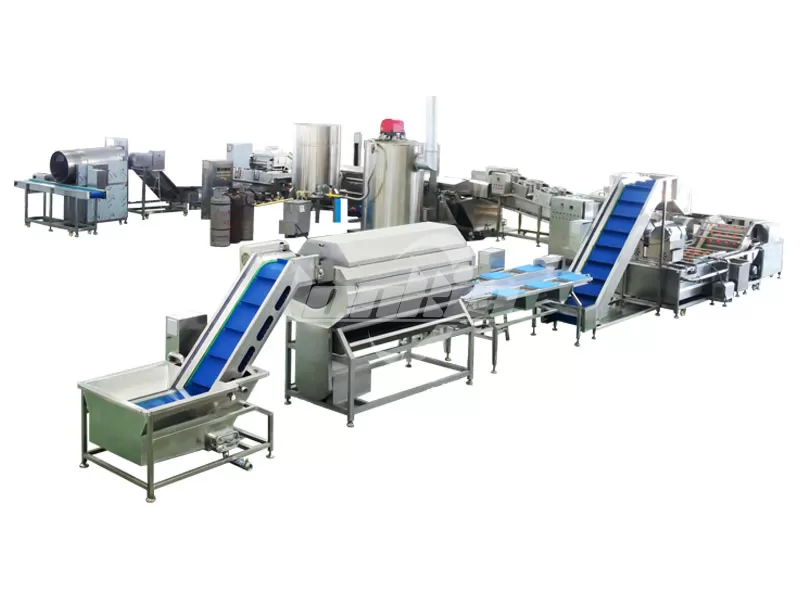
Potato Chip Production Line Process
A typical potato chip production process includes:
Potato Receiving → Washing → Peeling → Inspection → Slicing → Rinsing → Blanching → Cooling & Dehydration → Frying → De-oiling → Seasoning → Packaging
Not every factory needs exactly the same configuration. Some customers may require additional sorting, drying, cooling, or packaging equipment depending on their production requirements.
1. Potato Washing Machine
The first step is removing soil, sand, and other impurities from fresh potatoes.
An industrial potato washing machine uses water and mechanical movement to clean the potatoes efficiently. Different washing methods can be selected according to potato varieties, raw material conditions, and production capacity.
For large-scale processing, continuous washing equipment helps maintain a stable supply of clean potatoes for the following stages.
2. Potato Peeling Machine
After washing, the potatoes need to be peeled before slicing.
Common industrial peeling options include roller peeling machines and steam peeling machines. Roller peelers are suitable for many conventional processing applications, while steam peeling can provide efficient peeling with relatively low product loss.
The choice depends on the required capacity, potato variety, peeling quality, and investment budget.
3. Potato Inspection and Sorting Equipment
After peeling, potatoes may pass through an inspection or sorting conveyor.
Operators can remove damaged, discolored, or unsuitable potatoes before they enter the slicing process. For higher levels of automation, sorting equipment can also be integrated into the production line.
This step helps maintain more consistent raw material quality.
4. Potato Slicing Machine
The slicing machine cuts peeled potatoes into thin, uniform slices.
Slice thickness is an important factor in the final texture and appearance of potato chips. Industrial potato chip slicers are designed for continuous processing and can provide consistent slice dimensions at high production speeds.
For commercial production, the slicing machine should be matched to the required capacity of the entire line.
5. Potato Rinsing Machine
After slicing, excess starch needs to be removed from the potato slices.
A potato rinsing machine uses water to wash away surface starch and other residues. Proper rinsing can help reduce excessive sticking during frying and improve the appearance of the finished chips.
Depending on the process design, multiple washing stages can be used.
6. Blanching Machine
Blanching is an important pretreatment before frying.
A continuous blanching machine heats the potato slices for a controlled period. The blanching temperature and time can be adjusted according to the potato variety, slice thickness, and desired product characteristics.
After blanching, the slices normally need to be cooled and dehydrated before entering the fryer.
7. Cooling and Dehydration Equipment
After blanching, potato slices contain excess water and need to be cooled and partially dried.
Cooling equipment helps lower the product temperature, while a dewatering or drying machine removes surface moisture.
Effective moisture control is important because excessive water entering the fryer can increase oil consumption, affect frying stability, and influence the final crispness of the chips.
8. Continuous Potato Chip Fryer
The fryer is one of the core machines in a potato chip production line.
A continuous fryer transports potato slices through hot oil at a controlled speed and temperature. Industrial fryers can be configured with automatic temperature control, oil circulation, filtration, and other functions to improve frying consistency.
The frying system should be selected according to the target capacity, heating method, product requirements, and factory utilities.
9. De-oiling Machine
After frying, the potato chips contain excess surface oil.
A de-oiling machine uses centrifugal force, vibration, or other methods to remove excess oil from the finished chips. This helps control the final oil content and prepares the product for seasoning.
For continuous production, de-oiling equipment can be directly connected to the fryer outlet.
10. Seasoning Machine
The next step is adding salt, spices, or other flavoring ingredients.
A continuous seasoning machine rotates or conveys the chips while evenly distributing seasoning over the product surface.
Depending on the product range, manufacturers can configure the system for different flavors, such as salted, barbecue, cheese, or spicy potato chips.
11. Cooling Conveyor
Before packaging, freshly fried and seasoned potato chips usually need to be cooled to a suitable temperature.
A cooling conveyor allows the product to reach the required packaging temperature while also providing a buffer between seasoning and packaging.
For automated production lines, the cooling system can be designed according to the production capacity and factory layout.
12. Potato Chip Packaging Machine
The final stage is packaging the finished potato chips.
A typical automatic packaging system may include:
- Multihead weigher
- Vertical form-fill-seal machine
- Nitrogen filling system
- Date coder
- Finished-product conveyor
Nitrogen flushing can be used for snack packaging to help reduce oxygen inside the package and protect the product during storage and transportation.
The packaging format can be customized according to the target market, such as small retail bags or larger commercial packages.
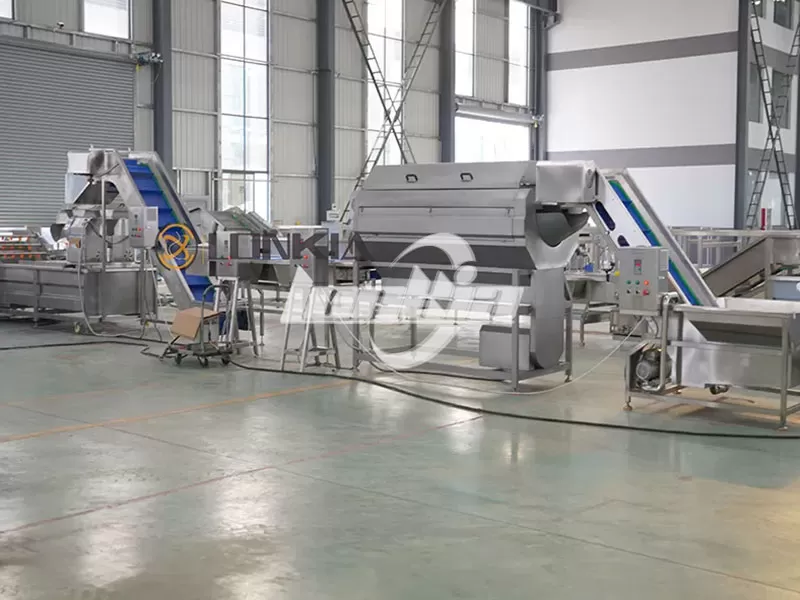
How to Choose Equipment for a Potato Chip Production Line?
Before purchasing equipment, manufacturers should consider several key factors:
Production Capacity
The capacity of each machine should match the target production output. A bottleneck at slicing, blanching, frying, or packaging can reduce the efficiency of the entire line.
Potato Variety and Raw Material
Different potato varieties have different moisture, starch, and sugar characteristics. These factors can affect peeling, slicing, blanching, and frying performance.
Automation Level
Small and medium-sized factories may choose semi-automatic equipment, while large commercial plants generally require continuous and highly automated processing systems.
Factory Layout
The equipment should be arranged according to the available workshop space and the required material flow. A suitable layout can reduce unnecessary transportation and improve production efficiency.
Final Product Requirements
Slice thickness, frying temperature, flavor, packaging size, and required shelf life all affect the equipment configuration.
Build a Potato Chip Production Line for Your Factory
There is no single standard configuration for every potato chip manufacturing project. A suitable line should be designed according to your capacity, potato variety, product specifications, automation requirements, and factory layout.
LONKIA provides potato processing equipment and complete potato chip production line solutions, from individual machines to integrated production lines. The equipment configuration can be customized according to your processing requirements and production capacity.
If you are planning a new potato chip factory or upgrading an existing line, providing your target capacity, finished product requirements, and workshop dimensions will help determine a suitable equipment configuration.