
Potato peeling is one of the first and most important steps in French fries, chips, and vegetable processing. The peeling method you choose affects not only the appearance of the final product but also raw material utilization, production efficiency, maintenance costs, and overall profitability.
Today, most processing plants use either steam peeling or brush roller peeling. Both methods are proven technologies, but they perform differently under various production conditions.
Two Different Approaches to Removing Potato Skins
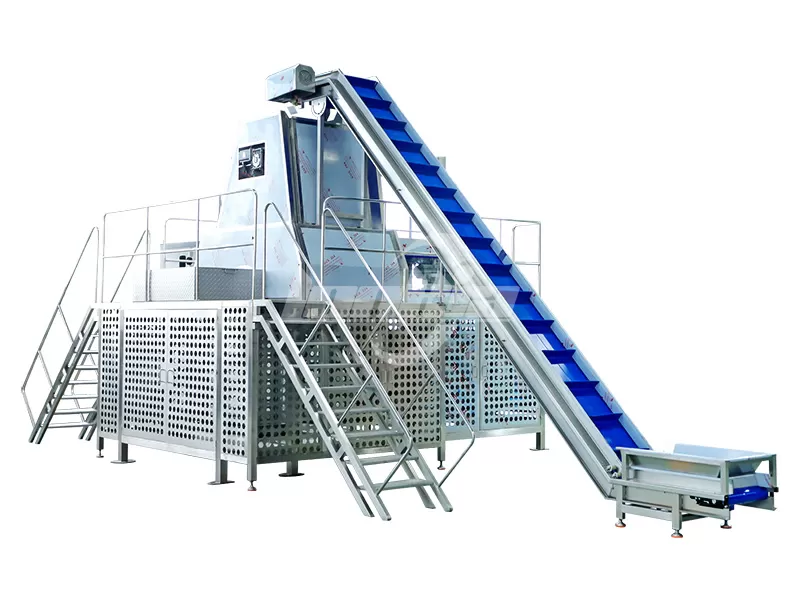
Steam peeling potatoes works by exposing potatoes to high-pressure steam for a short period. When the pressure is released, the skin separates from the surface and can be easily removed.
Brush roller peeling relies on rotating abrasive brushes and water to gradually rub away the potato skin. This method has been used in the industry for decades and remains common in small and medium-sized processing facilities.
The choice between the two often comes down to production scale, budget, and yield requirements.
Which Method Produces Less Waste?
For most processors, raw material yield is a major concern.
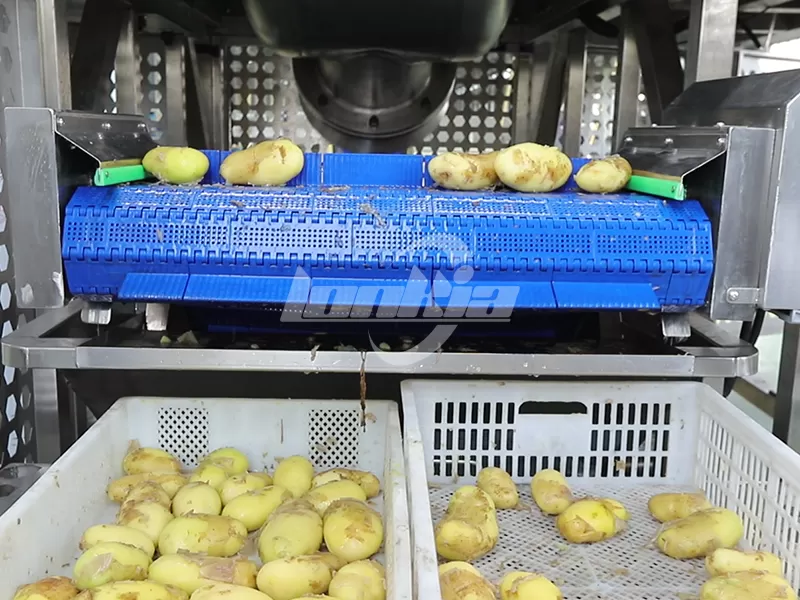
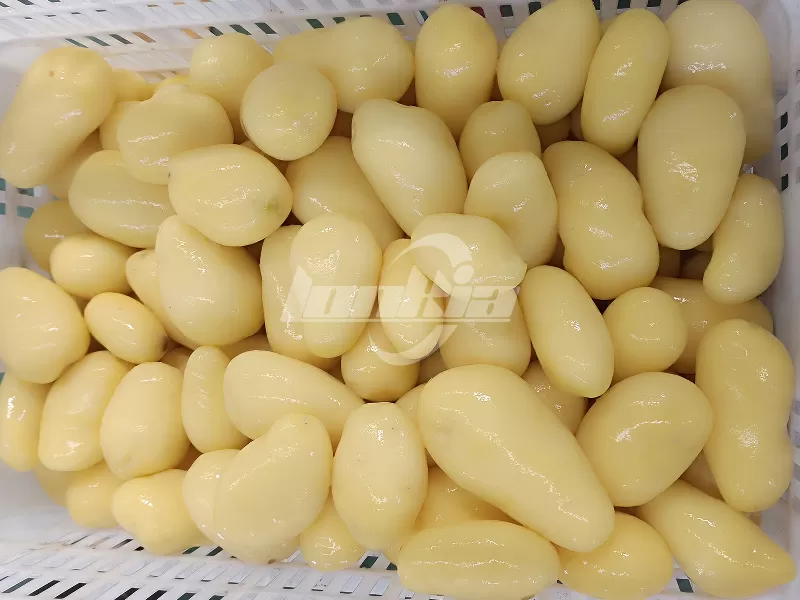
Because steam peeling removes only a very thin outer layer, it generally preserves more potato flesh. In commercial production, peeling loss is often around 5%–8%.
Brush roller peeling is more aggressive. Since the skin is removed through continuous friction, some edible flesh is removed at the same time. Typical losses are usually in the range of 10%–15%.
Consider a factory processing 10,000 kg of potatoes:
- Steam peeling may result in a loss of approximately 500–800 kg.
- Brush roller peeling may result in a loss of approximately 1,000–1,500 kg.
Over months of production, this difference can represent a significant amount of additional product.
Comparing Energy Requirements
Energy consumption varies depending on the equipment design and production setup.
Steam peelers require a boiler system and operate using high-pressure steam. Their energy demand is concentrated within a short processing cycle.
Brush roller peelers mainly consume electricity to drive motors, brushes, and water circulation systems. Although their hourly energy consumption is often lower, the peeling process generally takes longer.
For many processors, the real comparison is not simply energy usage per ton, but the balance between energy costs, labor costs, and production efficiency.
Production Capacity and Throughput
Factories with large production volumes usually focus on processing speed.
Steam peeling systems are commonly used in facilities producing frozen French fries, dehydrated potatoes, and canned vegetables. Depending on the model, capacities can reach several tons per hour.
Brush roller peelers operate continuously and are often chosen for smaller production lines. They provide flexibility and are relatively easy to integrate into existing processing systems.
For high-volume operations, steam peeling is often preferred because it can handle larger quantities while maintaining consistent results.
Maintenance Considerations
Maintenance requirements are another important factor when evaluating peeling equipment.
Steam peeling systems have relatively few moving parts. Routine maintenance typically focuses on valves, steam pipelines, and pressure-control components.
Brush roller peelers contain brushes, bearings, chains, and drive systems that experience regular wear. Over time, brushes need replacement and mechanical components require adjustment or servicing.
As production volume increases, maintenance costs can become a more noticeable part of operating expenses.
Hygiene and Food Safety
Food processors are under increasing pressure to meet strict hygiene standards.
Steam peeling equipment is generally easier to clean because of its enclosed design and compatibility with automated cleaning procedures.
Brush roller systems use open water circulation and direct mechanical contact with the product. While they can be cleaned effectively, they often require more manual attention during sanitation procedures.
For facilities subject to frequent food safety inspections, ease of cleaning can be a significant advantage.
Investment and Long-Term Cost
One reason brush roller peelers remain popular is their lower purchase price. They are generally less expensive to install and do not require a steam generation system.
Steam peelers involve a higher initial investment, especially when a boiler and supporting infrastructure are included. However, many processors find that the higher yield and lower product loss help offset the additional cost over time.
In larger factories, savings from improved yield alone can make a noticeable difference in operating profitability.
Which Products Are Best Suited for Each Method?
Different products may benefit from different peeling technologies.
Steam peeling is commonly used for:
- Frozen French fries production line
- Potato chips processing
- Canned vegetables
- Tomato peeling
- High-capacity industrial production
Brush roller peeling is often used for:
- Fresh vegetables
- Small-scale potato processing
- Multi-product operations
- Facilities with limited investment budgets
Choosing the Right Solution
There is no single peeling method that is ideal for every factory.
Processors focused on maximizing yield and reducing raw material waste often choose steam peeling. Those looking for a simpler and more economical solution may find brush roller peeling sufficient for their needs.
The most suitable option depends on production capacity, available utilities, labor costs, and long-term business plans.
Looking for a Potato Peeling Solution?
LONKIA supplies both steam peeling machines and brush roller potato peelers for food processing plants of different sizes.
Whether you are building a new French fries production line or upgrading an existing facility, our team can help you select the equipment that best matches your production requirements.
Contact LONKIA for equipment recommendations, technical support, and customized processing solutions.