
Blanching is an essential step in commercial French fries production. Before frying or freezing, freshly cut potato strips are briefly treated with hot water or steam. This process helps improve the color, texture, and overall quality of French fries while ensuring consistent results during large-scale production.
For food manufacturers, proper blanching can also reduce product defects, improve processing efficiency, and minimize waste. So, why is blanching so important, and how does it affect the final product?
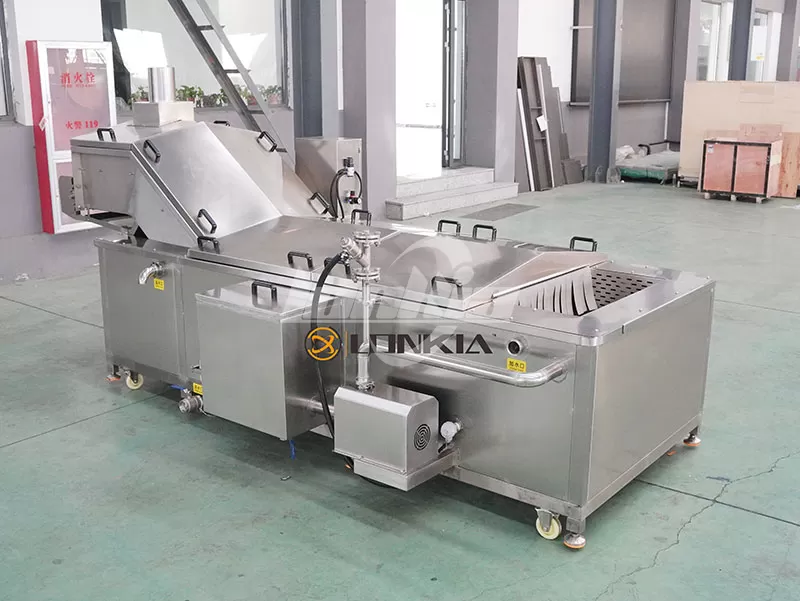
1. What Is Blanching in French Fries Production?
Blanching is a heat treatment process in which freshly cut potato strips are exposed to hot water or steam for a specific period.
In a typical frozen French fries production line, blanching takes place after potato cutting and washing but before drying and frying.
The main purposes of blanching include:
- Removing excess surface starch.
- Preventing excessive browning during frying.
- Improving the texture of French fries.
- Reducing enzyme activity.
- Helping achieve consistent product quality.
Blanching temperature and time depend on potato variety, strip size, and production requirements.
2. Why Is Blanching Important?
2.1 Maintain a Consistent Golden Color
One of the main reasons for blanching potatoes is to achieve a uniform golden color.
Potatoes contain natural sugars that can react with amino acids during frying, causing the Maillard reaction. Excessive reducing sugars may result in dark or unevenly colored French fries.
Blanching helps remove some of these sugars from the potato strips, reducing excessive browning during frying.
This is particularly important for frozen French fries manufacturers who need consistent color across large production batches.
2.2 Improve French Fries Texture
Blanching helps modify the structure of potato strips before frying.
Proper heat treatment can improve the texture of the finished product, helping create a crispy exterior and a soft interior after frying.
It also helps reduce uneven cooking during subsequent processing.
However, excessive blanching can soften the potatoes too much, causing broken strips and reducing product quality. Therefore, temperature and processing time must be carefully controlled.
2.3 Remove Excess Starch
Freshly cut potatoes release starch onto their surfaces. Excess starch can cause potato strips to stick together during processing and affect the appearance of the final product.
Blanching in hot water helps remove some of this surface starch.
This can improve the separation of potato strips and contribute to more consistent frying results.
2.4 Reduce Enzyme Activity
Raw potatoes contain enzymes that can cause undesirable changes in color and quality during processing and storage.
Blanching uses heat to inactivate many of these enzymes, helping maintain the quality of potato strips before freezing.
This is particularly important for frozen French fries production, where products may be stored for extended periods before consumption.
2.5 Improve Production Consistency
For industrial French fries manufacturers, maintaining consistent product quality is essential.
Blanching helps standardize the condition of potato strips before frying and freezing. When temperature, processing time, and water flow are properly controlled, manufacturers can achieve more consistent results across production batches.
Automated blanching equipment can also help reduce variations caused by manual operation.
3. What Happens If Potatoes Are Not Properly Blanched?
Insufficient or excessive blanching can affect the quality of French fries.
Common problems include:
- Uneven color: Excess reducing sugars may cause French fries to become too dark during frying.
- Poor texture: Inadequate heat treatment may result in inconsistent cooking, while excessive blanching can make potato strips too soft.
- Excessive breakage: Over-blanching can weaken potato strips and increase product losses.
- Inconsistent frying: Differences in potato condition can lead to uneven frying results.
To avoid these problems, manufacturers should select suitable blanching parameters based on potato variety, cutting size, and production capacity.
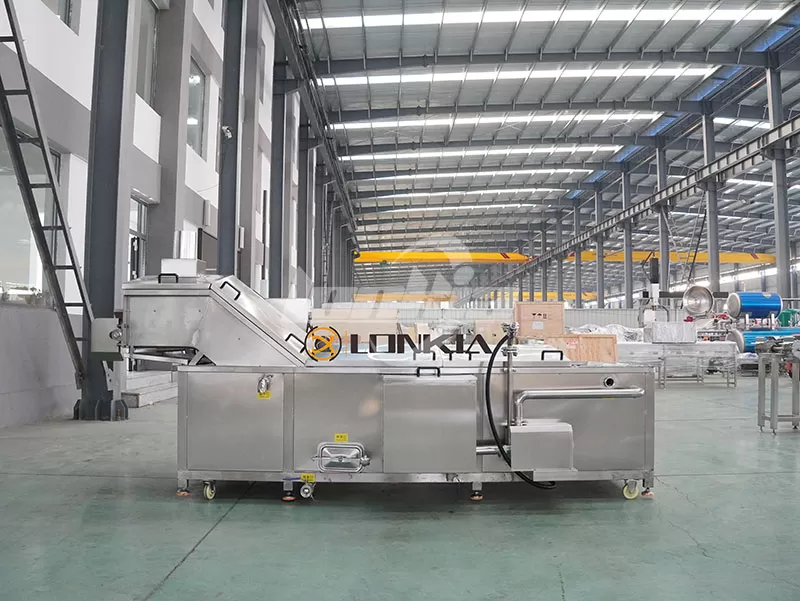
4. How to Choose the Right French Fries Blanching Machine?
When selecting an industrial blanching machine, manufacturers should consider several factors.
Production capacity: Choose equipment that matches the output of the entire French fries production line.
Temperature control: Accurate temperature control helps maintain consistent product quality.
Processing time: Adjustable blanching time allows the machine to accommodate different potato varieties and strip sizes.
Material: Food-grade stainless steel, such as SUS304, is commonly used for equipment that comes into contact with food.
Automation: Automatic temperature and conveyor speed control can reduce manual operation and improve production efficiency.
For a complete French fries production line, the blanching machine should be properly matched with the washing, cutting, drying, frying, and freezing equipment.
5. Conclusion
Blanching plays an important role in commercial French fries production. It helps control color, improve texture, remove excess surface starch, and reduce enzyme activity. Proper blanching also contributes to more consistent frying and freezing results.
For manufacturers planning to establish or upgrade a French fries production line, choosing the right blanching equipment and processing parameters is essential for maintaining product quality and reducing production losses.
LONKIA provides industrial French fries processing equipment and customized production line solutions. Whether you need an individual blanching machine or a complete French fries production line, equipment can be configured according to your processing requirements and production capacity.